Understanding Power Factor
Understanding poor Power Factor: Beer Analogy
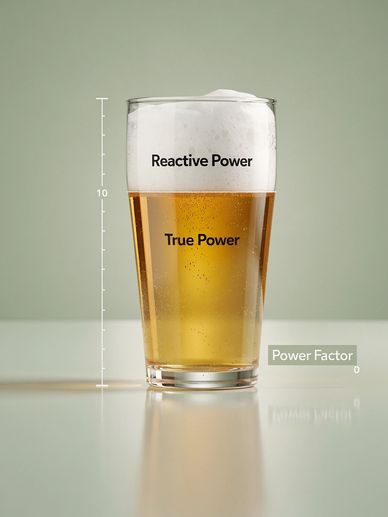
Imagine ordering a beer. You want a full glass of beer (real power), but you also get foam (reactive power). The glass represents total power capacity.
Power factor is the ratio of beer to total glass volume. A poor power factor means you're paying for a full glass but only getting half beer—the rest is wasted foam.
Why it Matters

In electrical systems, reactive power is like that foam—it takes up capacity without doing useful work. Your utility charges you for the entire glass, even though you only benefit from the beer portion.
Power factor correction eliminates the foam, maximizing the useful energy in every kilowatt you purchase
Invisible drain
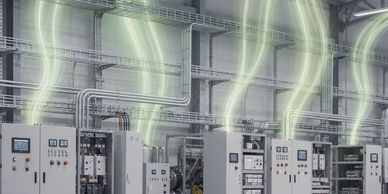
Poor power factor typically ranges from 0.65-0.85 in industrial facilities, meaning 15-35% of purchased electricity performs no useful work.
Compounding cost
Compounding cost
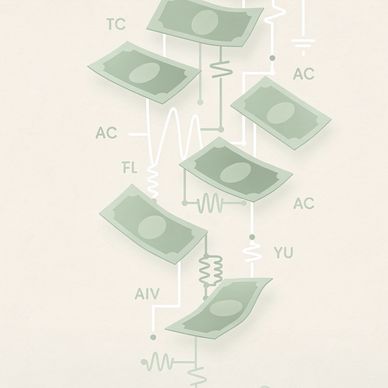
Utilities impose demand charges and penalties for low power factor, adding 10-30% to monthly electricity bills without providing additional energy.
Equipment Stress
Compounding cost
Equipment Stress
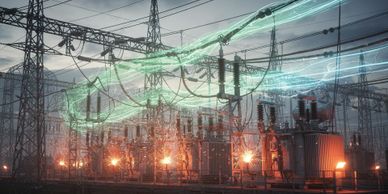
Reactive power causes excess current flow, overheating motors and transformers, reducing equipment lifespan by up to 40%.